A deposit is confirmed, but the balance does not update. A retried casino callback deducts the same stake twice. A settled sportsbook wager still has funds reserved. Finance and reporting then show different results for one transaction.
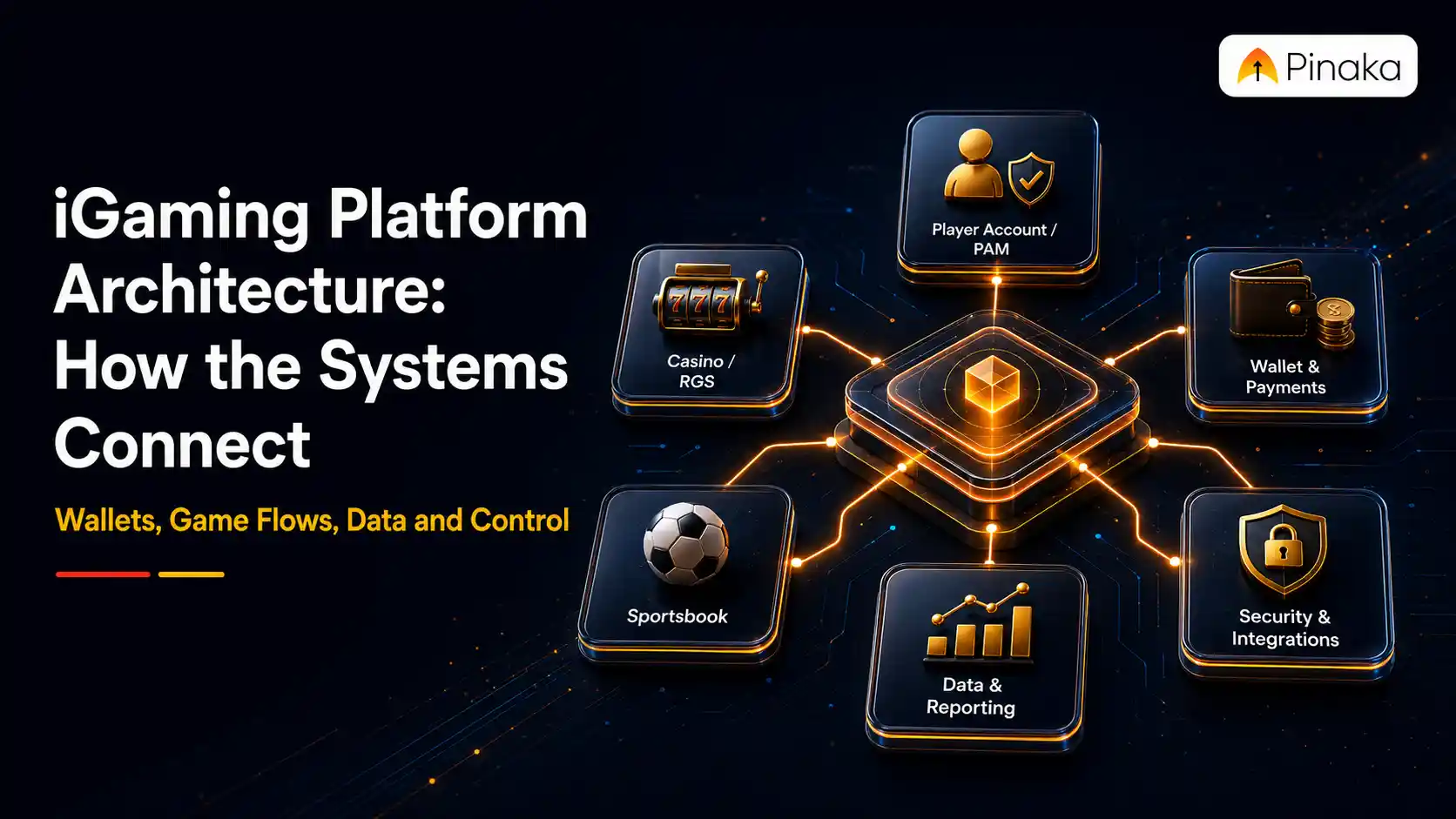
These problems affect payments, support, finance, compliance and player experience. iGaming platform architecture defines how player accounts, wallets, casino, sportsbook, payments, data and third-party services work together. It also defines record ownership, money flow, failure handling and operator control.
Key Takeaways
- 01Define the layersMake each responsibility visible from the start
- 02Name the source of truthEvery critical record needs one final owner
- 03Choose the wallet modelBalance player simplicity with operational control
- 04Design for retriesRound IDs and idempotency protect balances
- 05Respect sportsbook lifecycleSettlement and corrections need clear ownership
- 06Keep integration control clearFailures, API changes and exits still need owners
A mature architecture is defined by clear ownership, money flow and failure handling—not by the number of connected systems.
The Main Layers of an iGaming Platform Architecture
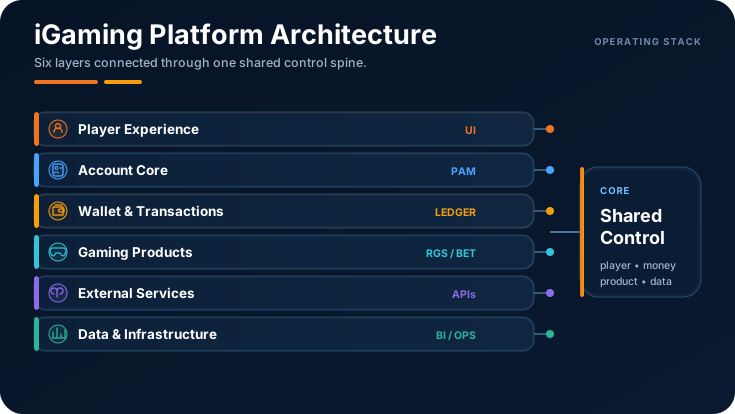
Most architecture diagrams divide the platform into a few main layers. The sibling guide on what an iGaming platform is explains the components themselves. Here, the focus is how each layer connects and who owns each responsibility.
- Player experienceWebsite, mobile apps, casino lobby, sportsbook interface and cashier. A problem here can stay inside the interface or interrupt registration, login, deposits or gameplay.
- Player and account coreUsually centred on PAM. It manages account status, restrictions, permissions and identity information, including many decisions about what a player can or cannot do.
- Wallet and transaction layerManages balances, debits, credits, adjustments and financial history. In many architectures, this layer controls the main gambling balance.
- Gaming productsCasino games and sportsbook technology. Casino content can connect through an RGS or aggregator, while sportsbook has its own wager, trading and settlement lifecycle.
- External servicesPayment providers, identity verification, fraud tools, CRM, affiliate systems and messaging services that connect into the operating flow.
- Data and infrastructureReporting, audit records, analytics, hosting, monitoring, deployment and recovery that support the wider operating environment.
The platform underneath may use a monolithic, modular, microservices-based or hybrid design. However, the label itself is not the main concern.
Instead, focus on release speed, failure containment, scaling and operating complexity. The broader lifecycle guide explains how iGaming technology needs change from launch to migration.
Who Owns the Player, Wallet and Gaming Records?
Start with one simple architecture question.
Copies of the same information often exist in several systems. For example, a CRM stores player information, a reporting warehouse stores transaction history and a game provider keeps its own record of a game round.
That duplication is normal. However, problems start when nobody knows which system holds the final record for a decision.
Set One Authoritative Record
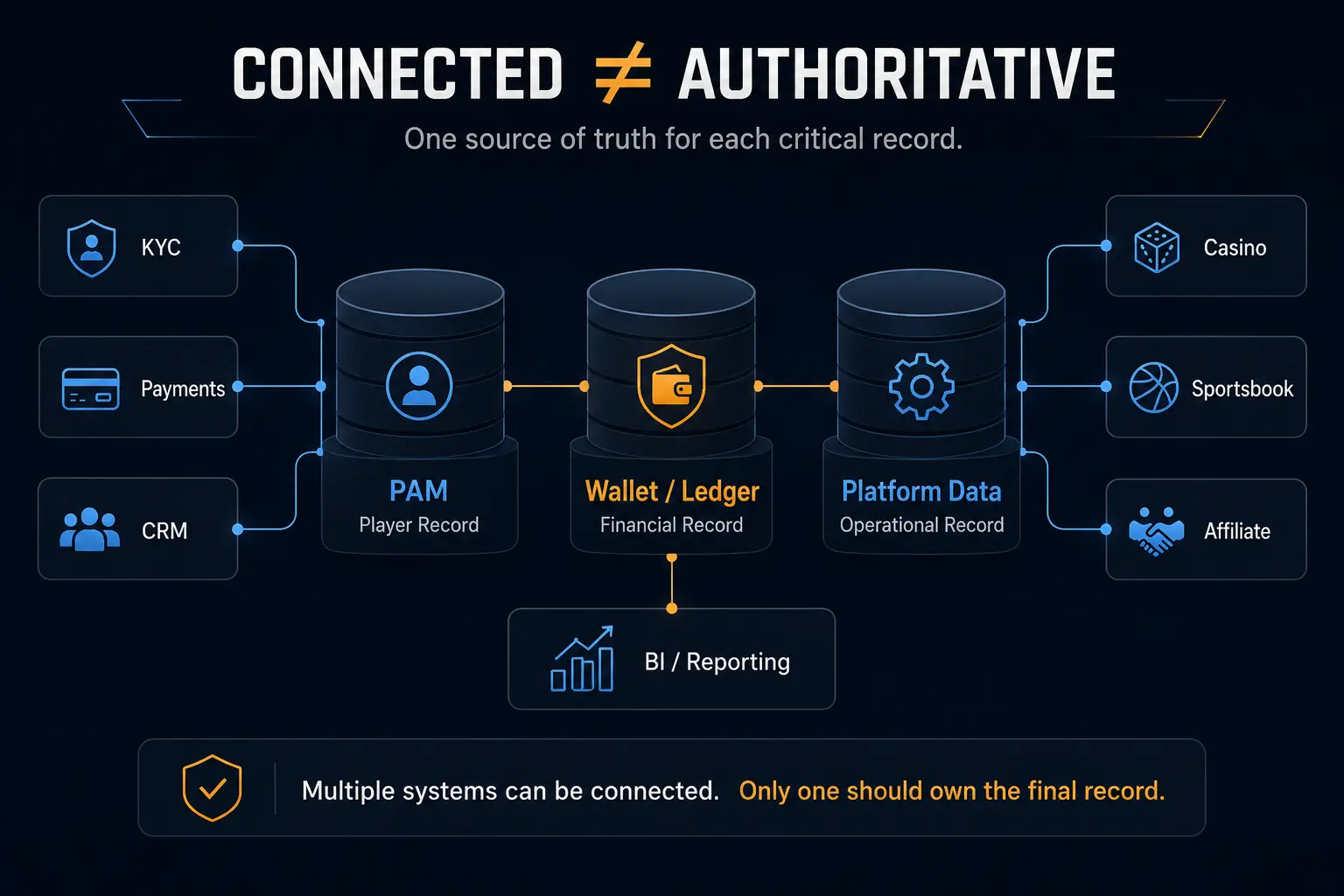
Next, the ownership table turns that principle into a practical operating check across the stack.
| Information | Usually Controlled By | Other Systems Using It | Operator Question |
|---|---|---|---|
| Player account | PAM or player-account service | CRM, KYC, support | Which status takes priority if systems disagree? |
| Available balance | Wallet or ledger | Casino, sportsbook, cashier | Which system can make the final balance change? |
| Deposit | PSP for payment result; wallet for credited balance | Finance, fraud, reporting | What happens if the PSP says success but the wallet does not update? |
| Casino round | RGS or game system for round state; wallet for money | Aggregator, reporting | How are the bet, win and rollback connected? |
| Sportsbook wager | Betting engine for wager state; wallet for money | PAM, reporting | Who controls settlement and later corrections? |
| KYC status | Verification service for the result; PAM for account action | Payments, compliance | Where is the restriction actually applied? |
| Bonus state | Bonus engine for eligibility; wallet for financial value | CRM, reporting | Who decides eligibility and who posts the reward? |
What Unclear Ownership Breaks
When ownership is unclear, problems follow quickly. As a result, balance disagreements can delay withdrawals, while support may struggle to explain what happened. In addition, finance may need to reconcile transactions manually, and bonus or compliance records can become incomplete.
Wallet Architecture: Seamless or Transfer Wallet
In practice, wallet architecture decides where the player's balance sits and how gaming products use it. Two common approaches are the seamless wallet and the transfer wallet. For the wider operating-model decision, see how to choose the right iGaming solution.
BetSolutions documentation, for example, describes both integration modes. Seamless mode uses operator-side wallet functions for bets, wins and balances, while transfer mode uses deposit, withdrawal and balance-transfer functions.
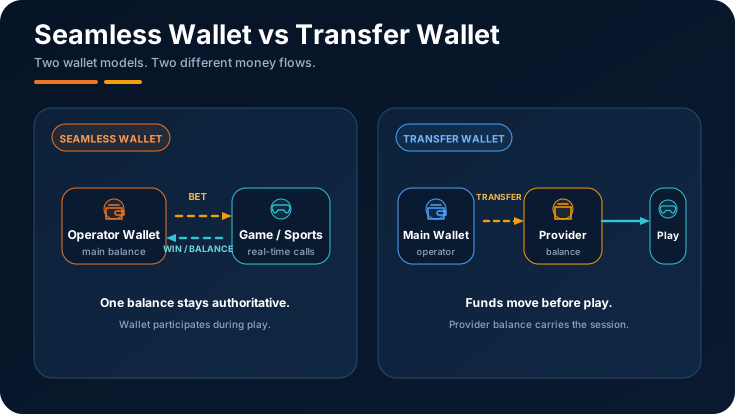
Seamless Wallet
In a seamless model, sometimes called a single-wallet model, the operator keeps one main balance. Connected gaming products use that balance in real time.
The game or betting system then sends balance checks, debits and credits directly to the operator wallet.
Therefore, the player does not need to move funds manually between casino, live casino and sportsbook products. However, this creates a stronger technical dependency on the wallet.
The wallet must respond quickly, remain available during play and handle repeated or out-of-order requests safely.
Transfer Wallet
By contrast, a transfer-wallet model moves funds from the main account into a product-specific or provider-specific balance before play. The gaming provider can then use that balance without calling the operator wallet for every individual game transaction.
As a result, transfer mode reduces the wallet's real-time workload. However, it adds more balance-management work because the operator must reconcile transfers and provider balances.
The operator can initiate those transfers manually, automate them or hide them behind the player interface.
Operational Benchmarks for Wallet Design
There is no universal wallet threshold because each provider contract differs. Still, procurement and load testing need concrete figures. Use the following as evaluation benchmarks, then replace them with the limits in the signed API contract and SLA.
IOP Global's public integration docs recommend a response under 200 ms because wallet latency is player-facing during a spin.
Stakes documents a 3-second timeout, while CasinoWebScripts treats 5 seconds or more as timed out. These are failure boundaries, not performance targets.
Run automated reconciliation at least daily. Assign unresolved wallet, transfer or provider mismatches and escalate them by the next business day instead of allowing drift to accumulate.
Use 99.9% as a minimum comparison floor for the wallet/API path. For revenue-critical synchronous flows, ask whether 99.95% or 99.99% is available and what exclusions apply.
| Area | Seamless Wallet | Transfer Wallet |
|---|---|---|
| Balance control | Operator wallet in real time | Operator balance plus provider or product balance |
| Player experience | Usually one balance across products | May involve balance transfers |
| Real-time wallet use | Wallet is involved in individual gaming transactions | Lower per-round dependency on the main wallet |
| Failure impact | Wallet failure can affect several products | Failure may stay closer to one provider |
| Integration need | Fast and duplicate-safe wallet API | Transfer and balance-management integration |
| Reconciliation | Real-time wallet records | Transfer and provider-balance reconciliation |
| Moving between products | Usually simple | Depends on the transfer setup |
Therefore, the question is not which model sounds more modern. Compare product mix, transaction volume, latency tolerance and technical capability. If wallet ownership is part of a wider technology decision, see Build vs Buy in iGaming.
How Casino Games Connect to the Platform
A common casino setup connects the game client to the game provider's Remote Gaming Server (RGS). The connection may also pass through an aggregator before reaching the operator platform and wallet.
The exact setup can vary. However, the responsibility is usually straightforward: the RGS manages the game and round state, while the wallet manages the player's money. The integration must keep those records aligned.
The Round Lifecycle
- 01Balance checkConfirm available funds
- 02BetDebit the stake
- 03Game resultRound state resolves
- 04Win or lossFinancial outcome
- 05CompletionFinal round state
In practice, two identifiers matter most because they keep the gaming and financial records linked.
If a rollback or cancellation occurs, the platform reverses an earlier financial action and refers back to the original transaction. Therefore, failures and corrections must leave the player's balance in the correct state.
Why Retries Matter
A gaming integration cannot assume that every request arrives once or that every response reaches the provider successfully. CasinoWebScripts' published RGS documentation describes timeouts, retries and a unique transaction ID used to support idempotent processing.
- After a timeout, the same callback arrives again.
- A debit succeeds, but the response is lost.
- Meanwhile, the connection fails after the wager.
- Later, a cancellation or rollback arrives.
- For a short period, the RGS and wallet show different round states.
Therefore, the main protection against duplicate financial changes is idempotency. In other words, the same transaction must not change the player's balance twice if it arrives again. Retries are normal integration behaviour rather than automatic evidence of a broken system.
As a result, the operator must be able to find the affected transaction, confirm the correct result and apply the right account correction. Round IDs and reliable transaction history make that process easier.
How Sportsbook Fits Into the Architecture
By contrast with a casino round, a sportsbook wager may stay open for the full length of an event. That longer transaction lifecycle means sportsbook should not be treated as just another casino integration.
As a result, sportsbook often runs as a separate engine. It can manage pricing, markets, risk controls, wager records and settlement logic, then connect with the wider platform's PAM and wallet.
- During placementIf the price changes, which price does the sportsbook accept, and which system records the final bet?
- While the bet is openDoes the platform reserve the correct funds, and what does the player see as available balance?
- At settlementWhich system decides the result, and which system updates the player's money?
- After settlementIf the official result changes, can the sportsbook correct or resettle the wager without losing the original record?
- During supplier failureDoes a sportsbook problem stay inside sportsbook, or can it affect casino and other products?
Therefore, a sportsbook integration is not complete just because the betslip works. Wager acceptance, wallet updates, settlement, voids, corrections, resettlement and reporting all need clear ownership.
Where Weak Architecture Costs Revenue
Architecture problems rarely stay inside the engineering team. For example, they can affect payment conversion, player support, playing time, reconciliation and commercial reporting.
Architecture does not generate revenue directly, but it determines how easily technical failures interrupt revenue-producing journeys.
Third-Party Providers and Integration Control
Modern iGaming platforms depend on payment providers, KYC services, game providers, aggregators, sportsbook systems, CRM, affiliate software and risk tools. The guide to what an iGaming platform is explains where those boundaries can move.
One player journey may cross several of these services. Therefore, the important architecture question is who owns each responsibility when data, money or status moves between them.
- Who maintains the integration?The platform supplier, operator or third party may own this responsibility. It needs to be clear before an issue occurs.
- Who investigates a failure?Operations should be able to see which connection failed without several suppliers spending days deciding who caused the problem.
- Who manages API changes?Providers change authentication methods, remove endpoints and release new API versions. Therefore, one team needs clear responsibility for those updates.
- What changes if the operator replaces one provider?The operator should understand which surrounding systems depend on that provider before making the change.
- What happens to unfinished transactions?Pending deposits, open game rounds, unsettled bets and withdrawals need clear final states if a connection fails.
When those responsibilities appear in supplier offers, use our iGaming software provider proposals guide to compare scope, integrations, support, evidence and ownership before choosing a provider.
The operator's responsibility does not disappear because another company provides part of the technology. A platform can offer many integrations and still leave the operator with limited control.
That control question also matters when deciding what to build, buy, integrate or combine, especially when every change, investigation or data request depends on the core supplier.
Reliable Data for Finance, Compliance and Growth
The useful data question is not simply which database technology the platform uses. Instead, ask what each team needs to prove or rebuild from the data.
- Live operational dataAvailable balance, account status, payment status, bet state and bonus state. These records affect what the platform can do right now.
- Gaming and financial historyBets, wins, rollbacks, deposits, withdrawals, adjustments and settlements used by finance, support and compliance.
- Audit recordsShow who or what made important changes, including account changes, balance adjustments, configuration changes and restrictions.
- Analytics and reporting dataSupports CRM activity, affiliate reporting, commercial analysis and management dashboards.
In other words, the source of truth is the system whose state the business trusts for a decision. By contrast, a warehouse may contain the same transaction without controlling the player balance.
In practice, the checks are straightforward.
Keeping the Platform Reliable and Secure
Good architecture does not mean that nothing ever fails. Instead, it helps teams find failures quickly, contain their impact and recover safely.
As the stack evolves, the failure surface changes too. The lifecycle guide shows how technology needs change from launch to migration as brands, markets and integrations expand.
Therefore, a third-party integration remains part of the operator's security responsibility even when another company runs the software.
Conclusion
Strong iGaming platform architecture depends on clear ownership: who controls each critical record, how money and game state move, and how the platform behaves when systems disagree.
Good architecture supports consistent balances, reliable settlement, trustworthy reporting and contained failures. Weak architecture appears as duplicate transactions, stuck rounds, manual reconciliation and growing supplier dependency.
For the next buyer decision, use How to Choose the Right iGaming Solution to turn these architecture requirements into a practical solution shortlist.
Frequently Asked Questions
What Is iGaming Platform Architecture?
iGaming platform architecture shows how an online gambling operation organises and connects its underlying systems. For example, it covers PAM, wallets, casino and sportsbook products, third-party services, data systems and infrastructure.
Therefore, one of the main architecture questions is which system controls each important record and how that record stays consistent as information moves between systems.
What Is the Difference Between a Seamless Wallet and a Transfer Wallet?
In a seamless or single-wallet model, the operator wallet keeps the player balance, and connected gaming products call that wallet for real-time financial actions.
By contrast, a transfer-wallet model moves funds into a separate product or provider balance before play.
Seamless wallets simplify cross-product balance management, while transfer wallets reduce real-time load on the main wallet but add transfer and reconciliation work.
What Role Does an RGS Play in an iGaming Platform?
A Remote Gaming Server, or RGS, usually manages game logic and the state of casino game rounds. For example, it connects with the operator platform or wallet for bets, wins, cancellations and rollbacks.
In addition, round IDs and transaction IDs help both systems link the correct gaming and financial records.
Where Does the Sportsbook Sit in an iGaming Architecture?
Sportsbook often runs as a separate engine. As a result, it can manage markets, pricing, wager acceptance and settlement before connecting with the wider platform's player-account and wallet systems.
Its lifecycle can also include open wagers, settlement, voids, corrections and resettlement.
How Does an iGaming Platform Prevent Duplicate Transactions?
A common protection is idempotent transaction handling. For example, each financial action receives a unique transaction ID, and the platform checks that ID when the same request arrives again.
As a result, the platform avoids applying the same debit or credit twice. This matters because retries after timeouts and lost responses are normal in many integrations.
What Makes an iGaming Platform Architecture Scalable?
Scalability is not only about processing more transactions. Instead, the architecture should handle more players and higher transaction volume without creating bottlenecks.
Therefore, busy components should scale where needed, failures should stay contained, and new products or integrations should not require unnecessary changes across the whole platform.