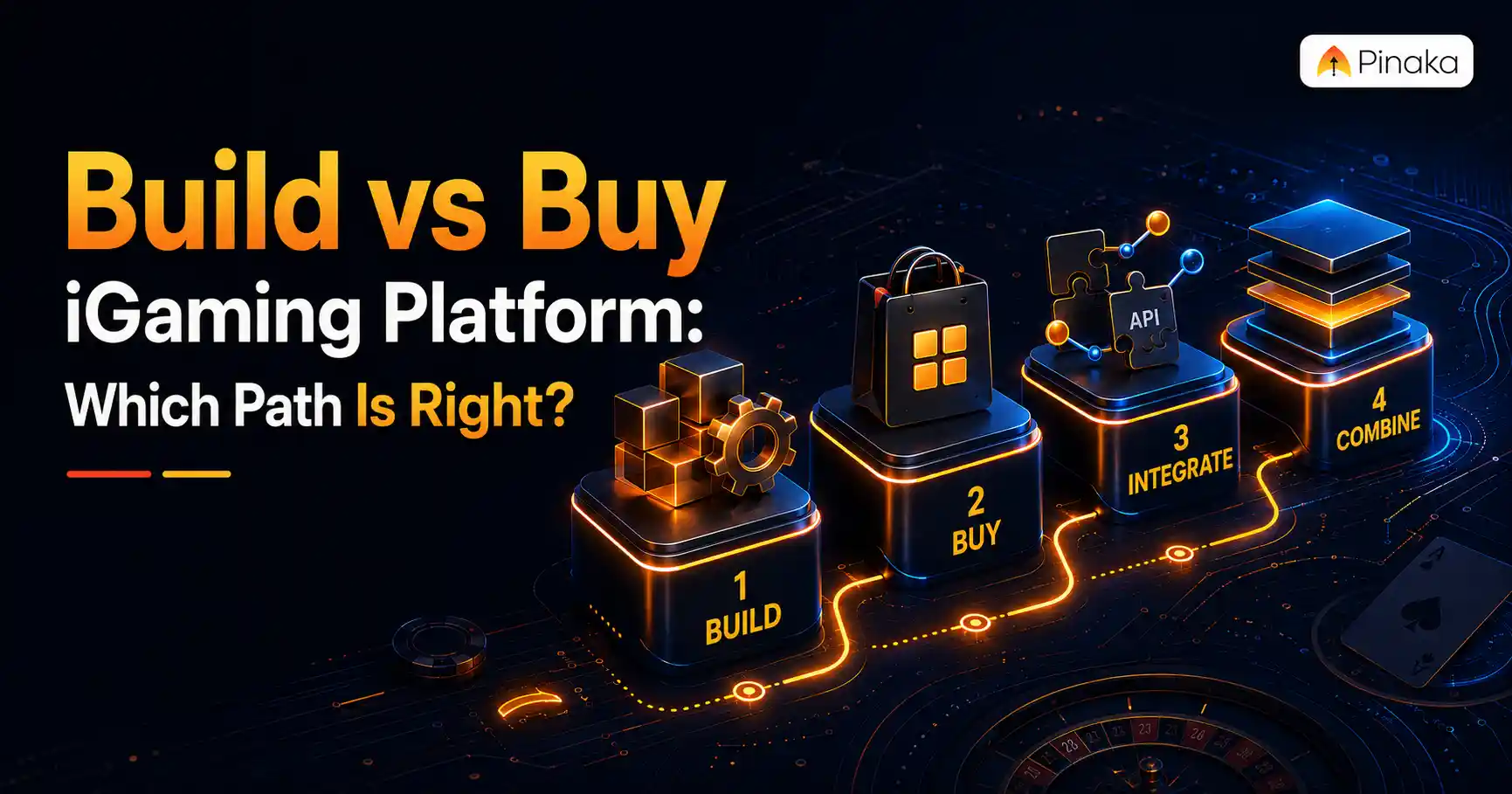
A build vs buy iGaming platform decision becomes misleading when you treat the stack as one unit. For example, mature payment, verification and account systems may not need to be rebuilt. However, proprietary trading logic, reward mechanics or a distinctive player experience may justify greater ownership.
Instead, decide capability by capability. Build where ownership creates clear strategic value and your team can support it. Buy mature technology when code ownership adds little advantage, and integrate a specialist product when the core still works. Finally, combine licensed and custom technology only when the boundary stays clear. If your wider delivery model is still undecided, start with choosing the right iGaming solution.
Key Takeaways
Why the Whole-Stack Build vs Buy Question Has No Good Answer
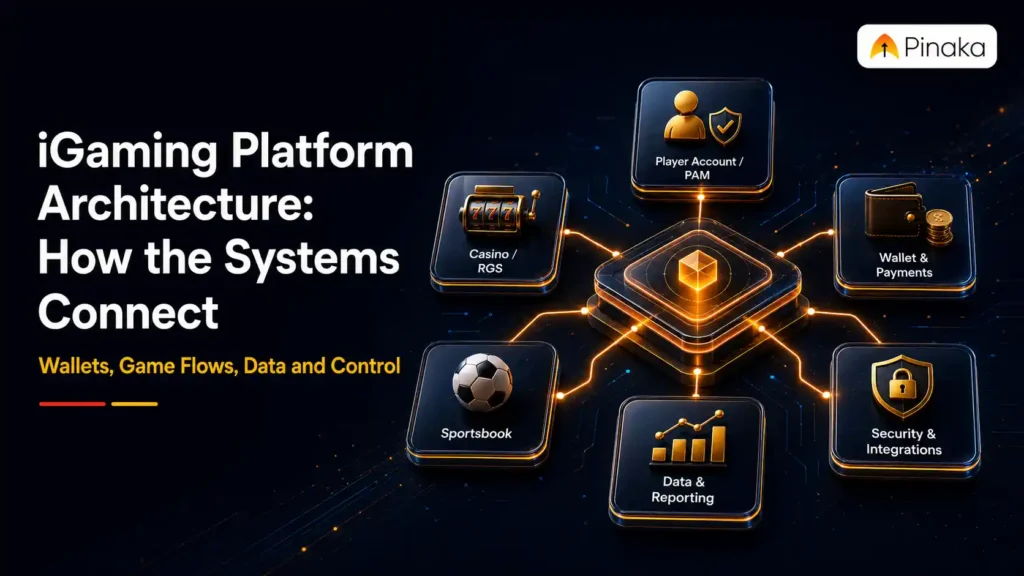
Your iGaming stack may include a PAM, wallet, ledger, sportsbook, casino aggregation, payments, and KYC or AML tools. In addition, it may include responsible gambling controls, CRM, bonus management, affiliate technology, reporting and the frontend.
However, these capabilities do not create value in the same way. Payments or verification may be critical without giving you a reason to own the code.
By contrast, proprietary trading logic, reward mechanics or a distinctive player experience can create a stronger ownership case.
Therefore, building every layer creates permanent engineering work around mature problems. On the other hand, buying every layer can place genuine differentiators under supplier control.
In other words, ownership means responsibility for the roadmap, maintenance, security and long-term operation. It does not simply mean holding source code.
You can commission custom iGaming development and still retain ownership of the resulting capability.
How to Decide Which iGaming Components Deserve Ownership
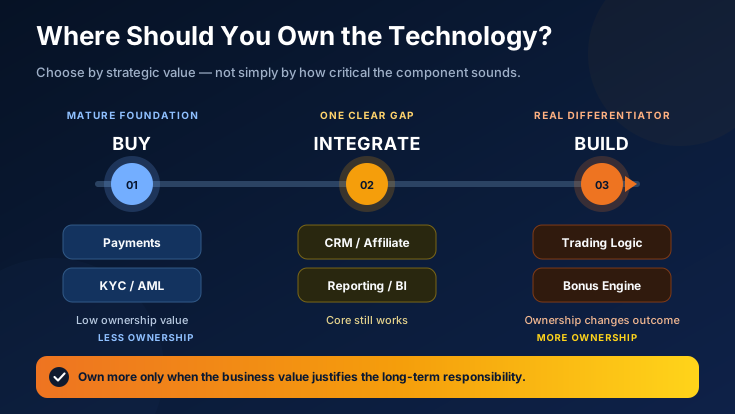
First, separate technology importance from ownership value. Ask what direct ownership would change.
Then test the long-term operating and regulatory burden that comes with it.
Commodity Foundations
Mature infrastructure is usually a Buy decision when established technology already meets the requirement. Rebuilding it may consume engineering capacity without creating enough competitive advantage.
Configurable Capabilities
CRM, affiliate management and reporting can differentiate your operation through rules, workflows and data. In these cases, configuration can matter more than proprietary code.
Strategic Differentiators
A capability becomes a serious Build candidate when established products cannot reproduce the required advantage. Examples include proprietary trading logic, reward mechanics or a distinctive product workflow.
Operational and Regulatory Risk
Assess security, monitoring, testing, regulatory change, incident response and continuity. Strategic value alone does not make a capability a good ownership choice.
When Should You Build Custom iGaming Technology?
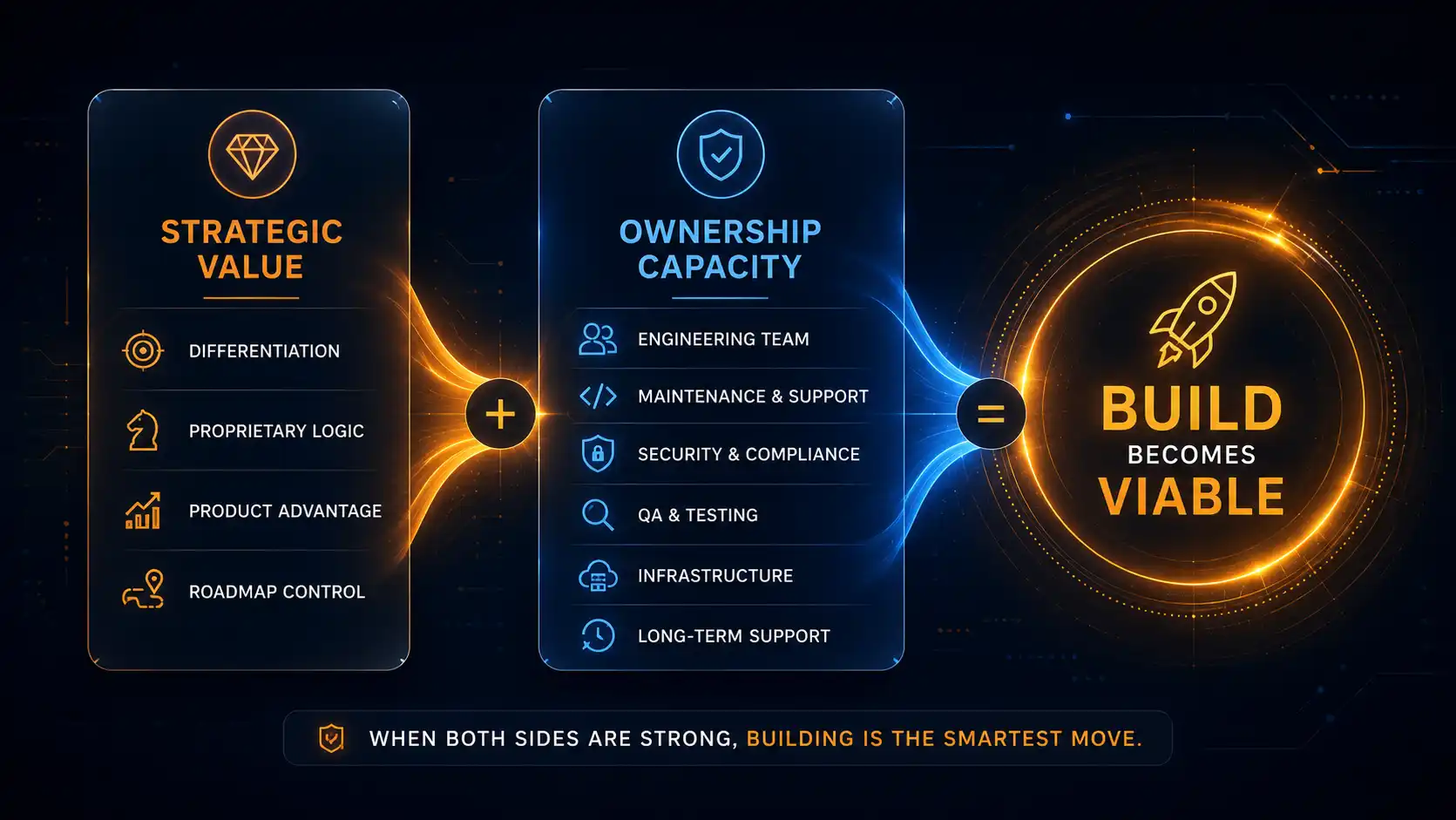
A strategic differentiator is only a Build candidate. Custom development becomes credible when available products limit an important requirement.
Your business must also be able to support the capability after launch.
Ask What Ownership Would Actually Change
Before approving a build, define the outcome. Ask whether ownership protects proprietary logic, removes a roadmap dependency or protects IP.
Also ask whether it improves decisions that affect revenue, retention or operating performance.
For example, standard bonus campaigns may suit a configurable product, while one missing capability may justify an integration.
Proprietary reward logic can justify custom development. However, if it sits cleanly above an established PAM and wallet, a combined architecture may be stronger.
Confirm That Your Business Can Sustain Ownership
After launch, version one becomes an ongoing product. Building also means engineering, QA, infrastructure, security and monitoring.
Documentation, incident response, technical debt and regulatory change also require long-term capacity. External development does not remove those responsibilities.
How Much Does It Cost to Build or Buy an iGaming Platform?
There is no single credible price because published figures cover different scopes. A broad platform, sportsbook engine, MVP and specialist component are not comparable projects.
The figures below are scope-specific reference points. EUR and GBP source figures are shown as rounded US-dollar equivalents for easier comparison.
| Technology Project | USD Cost Example | Published Timeline | Scope |
|---|---|---|---|
| Broad proprietary iGaming platform | ≈$2.91M–$5.82M | 12–24 months to MVP | SOFTSWISS broad standalone in-house platform estimate |
| Third-party B2B platform | ≈$582K–$1.16M first-year expenses | Around 6 months | SOFTSWISS comparison; actual scope depends on the agreement |
| Internal sportsbook and casino stack | Multi-million-dollar equivalent | 12–18 months for core engine | Gamingtec directional estimate before full launch work |
| Custom affiliate-management system | $450K–$900K in engineering salaries | 12–18 months | Cellxpert specialist-component estimate; additional costs excluded |
SOFTSWISS provides the broad-platform and third-party B2B estimates above. Using the 28 August 2026 reference rate, those published figures convert to approximately $2.91M–$5.82M and $582K–$1.16M.
Gamingtec describes a complete sportsbook and casino stack as a multi-million project. It cites roughly 12–18 months for core-engine development.
By contrast, Cellxpert gives a narrower affiliate-system example of about $450K–$900K in engineering salaries.
USD conversions are rounded using 28 August 2026 reference rates. ECB reference rates.
Compare Total Cost of Ownership, Not Only the Initial Quote
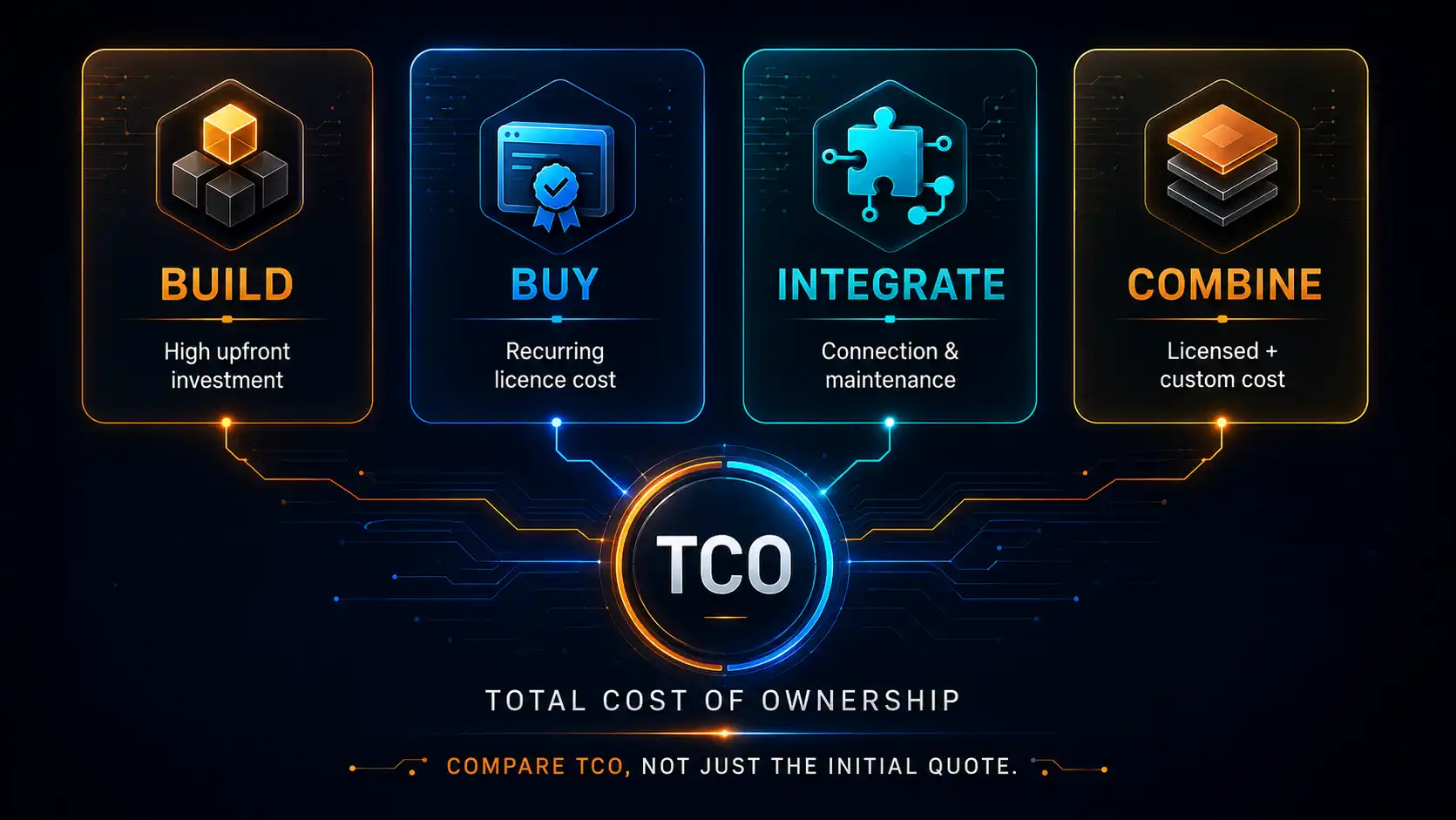
Build adds engineering, infrastructure, maintenance and regulatory-change costs. Buy shifts more work to the supplier but keeps licence, support and commercial costs.
Integrate adds connection and API maintenance. Combine carries supplier costs plus responsibility for the custom layer and system boundary.
Therefore, a lower implementation quote does not automatically mean a lower total cost of ownership.
What Each Technology Path Makes You Own After Launch
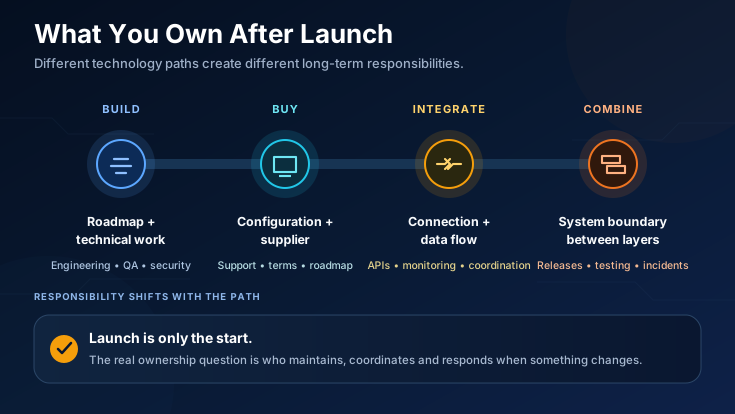
After launch, the decision shifts to ongoing responsibility. You need to know who maintains the capability, responds to failures and keeps it compatible as the stack evolves.
Build Where Ownership Changes the Outcome
Build gives you control over logic, priorities and release timing. Therefore, your team also owns engineering, QA, infrastructure and security.
Monitoring and incident response stay with your operating model as well. A credible Build decision needs permanent capacity.
Buy Mature Foundations
Buy transfers much of the core product maintenance to the supplier. However, you still own configuration, permissions, data access and support escalation.
You also own the commercial relationship. A core iGaming platform should give you enough control and data access for your operating model.
Integrate Isolated Gaps
Integrate when the core still works but one capability is missing. Before adding specialist products, confirm APIs, events and data ownership.
Also define monitoring and escalation. Integration becomes weak when the gap spreads across the core or requires constant manual workarounds.
Combine Across Clear Boundaries
Combine when a custom capability can sit cleanly above or beside mature licensed infrastructure. Keep data authority, releases, testing and incident ownership explicit.
If the custom layer repeatedly compensates for core limits, you may be postponing a platform decision.
Build vs Buy iGaming Platform Decision Framework
Once the capability is clear, use these four questions to narrow the ownership path.
Does Direct Ownership Create Meaningful Advantage?
If mature technology already meets the requirement and ownership would not change the outcome, start with Buy.
Is the Weakness Isolated While the Core Still Works?
If one distinct capability is missing but the platform remains suitable, evaluate Integrate.
Can Proprietary Technology Sit Above Mature Infrastructure?
If the differentiator deserves ownership but mature infrastructure can support the rest, evaluate Combine.
Can Your Business Sustain Full Ownership?
If ownership creates a clear advantage and your organisation can fund, secure and maintain it, Build becomes credible.
| Path | Choose It When | What It Commits You To | Main Risk |
|---|---|---|---|
| Build | Existing products materially limit an important requirement and you can sustain ownership | Permanent product, engineering and operational responsibility | Underestimating post-launch work |
| Buy | Mature technology meets the requirement and ownership adds little advantage | Supplier terms, recurring costs and product boundaries | Supplier limits restrict you later |
| Integrate | The core works but one isolated capability is missing | Another system, data flow and integration boundary | The connection becomes the weak point |
| Combine | A proprietary capability can sit cleanly on mature licensed infrastructure | Coordination between licensed and custom technology | Responsibility becomes unclear |
The strongest option delivers the capability without creating unnecessary cost, dependency or responsibility.
Apply the Decision Component by Component
For example, the same stack can use all four paths. You might buy a PAM and wallet foundation, then integrate a specialist CRM.
At the same time, you can build proprietary logic and combine it with licensed infrastructure.
As a result, capital and internal expertise stay focused on technology that genuinely deserves ownership.
How Pinaka.games Supports Your Technology Strategy
Pinaka.games can support established platform technology, specialist integrations, custom development and combined architectures. However, the right engagement depends on the capability, target markets, required connections and level of readiness.
Once your ownership direction and scope are clear, compare provider proposals against the same technical, commercial and delivery requirements. This helps you avoid offers built around different assumptions.
Conclusion
A sound build vs buy iGaming platform decision rarely produces one answer for the complete stack. Mature products can solve some requirements efficiently.
Other capabilities may deserve greater control because they directly affect how your business competes.
Therefore, classify each capability and define what ownership would change. Then confirm your organisation can sustain the responsibility after launch.
Build genuine differentiators, buy mature foundations, integrate isolated gaps and combine only where the boundary remains clear.
Frequently Asked Questions
Generally, buy or license an established platform when it supports your products, markets, integrations and operating model. However, build when available technology limits a critical requirement and ownership creates defensible value. As a result, many operators use different answers for different components.
There is no universal development price. For example, SOFTSWISS's broad standalone platform estimate converts to approximately $2.91M–$5.82M using the 28 August 2026 reference rate. Specialist components can follow a very different cost model, so published figures should be treated as scope-specific examples.
For example, SOFTSWISS estimates roughly 12 to 24 months to MVP for a broad proprietary platform. Meanwhile, Gamingtec cites around 12 to 18 months for core-engine development of a sportsbook and casino stack. In addition, integrations, QA, certification and market requirements can extend the full timeline.
Build capabilities where direct ownership creates an advantage that mature products or integrations cannot reproduce well. For example, candidates can include proprietary trading logic, reward mechanics or product workflows central to your model. However, the capability should pass both the strategic-value and ownership-capacity tests.
Integrate when your existing core remains suitable but one isolated capability is missing. Before proceeding, confirm the required APIs, events, data ownership, monitoring and troubleshooting responsibilities. Otherwise, integration becomes less suitable when the weakness affects several parts of the core.
A hybrid architecture can work well when mature licensed infrastructure supports a clearly separated custom capability. For example, you can own a genuine differentiator without rebuilding established foundations. However, data authority, releases, testing and incident responsibilities must remain clear across the boundary.
Published cost and timeline figures are third-party vendor estimates, not guaranteed Pinaka.games prices or delivery commitments. Technology, licensing, testing and certification requirements vary by component, operating model and jurisdiction. Confirm the applicable commercial, technical and regulatory requirements before making an investment decision.