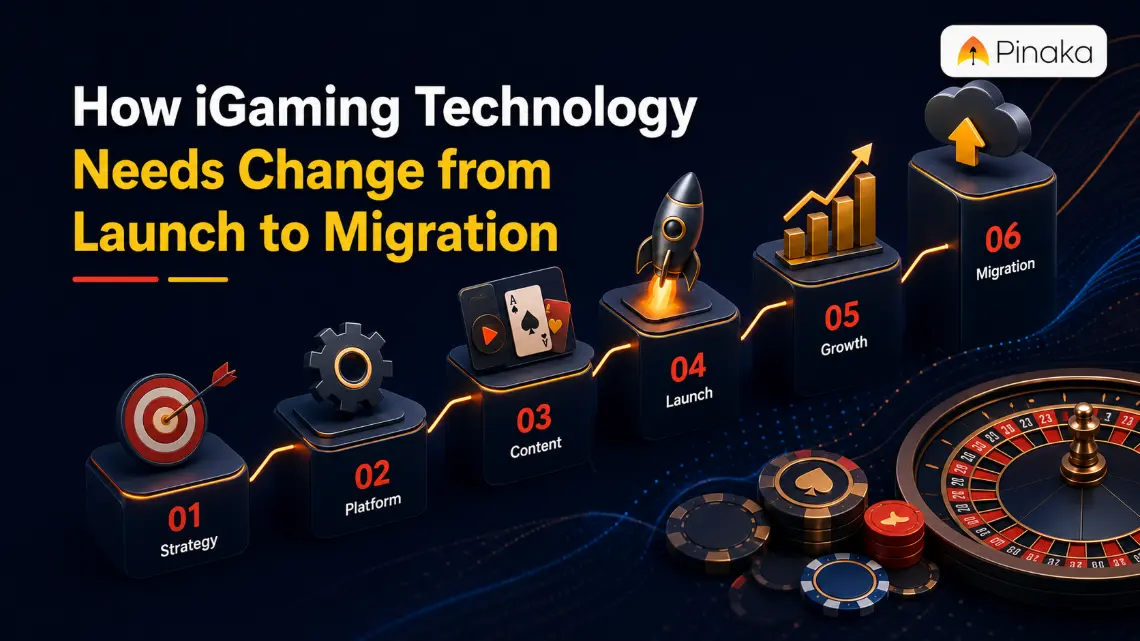
iGaming technology needs change because the operating model changes from launch to growth, multi-brand expansion, new-market entry, modernisation and migration. At launch, the priority is a reliable foundation for registration, payments, content, compliance, support and reporting. As real player activity grows, teams need better data visibility, faster routine changes and stronger day-to-day control.
Expansion adds another layer. Multiple brands need clearer separation, permissions and governance, while new markets introduce local payments, verification, content, reporting and regulatory requirements. Later, the right move may be a targeted upgrade rather than a replacement; migration becomes justified when platform, data, integration or supplier constraints block the next realistic business need. Good planning means solving the proven constraint without closing off the next move.
Why iGaming Technology Needs Change Over Time
Two operators can compare the same feature list and still need very different technology. A new brand is trying to get live without operational gaps.
A group running several regulated brands is trying to keep data, permissions, reporting and day-to-day control from becoming messy.
The useful question is not how many features a platform has. It is whether the platform fits the work the team has to do now and can handle the next realistic change.
Buying too far ahead adds cost and implementation work before the operating model is proven.
Buying too little creates another problem: the team can hit limits just as reporting, integrations, control or expansion start to matter.

Overbuying
Overbuying starts when the first build is shaped around a future version of the operation rather than the one that actually exists. Extra custom work, integrations and controls may look reassuring on paper, but they add cost and maintenance before there is evidence that the business will use them.
Underbuying
Underbuying is the opposite problem. The quickest setup gets the operation live, then becomes difficult to work with as soon as the team needs deeper reporting, direct data access, more configuration control or support for another brand or market.
Implementation ranges are directional estimates and vary with supplier scope, custom work, data quality, certification and internal readiness. Regulatory timelines should always be checked with the relevant authority.
Launching an iGaming Business
What Changes
A launch has very little operating history to lean on.
Licensing, payments, content, support, testing and internal ownership all have to come together at roughly the same time, so gaps that would be manageable later can block the launch entirely.
Technology Support
The stack needs to support the full player journey from registration and verification through gameplay, payments, support and reporting.
Reliability and clear ownership matter more here than adding advanced capability the team may not use for months.
The product matters as well. Casino, sportsbook and crypto operations do not share the same content, payment, compliance or integration dependencies, so the launch scope has to reflect what is actually being operated.
Common Problems
Launch plans often get bloated by trying to prepare for traffic, brands and markets that may be years away.
The result is usually more custom work, a slower implementation and a higher bill before the first operating model has even been tested.
What to Prioritise
Keep the first scope tied to launch readiness. Licensing, payment relationships, verification, player support, responsible gambling, content approvals, reporting and post-launch configuration all need clear owners before go-live.
Supplier involvement does not remove the operator’s oversight responsibility. Define who owns testing, compliance evidence, configuration changes and incident escalation before go-live.
Growing the Operation
What Changes
Real player activity exposes things a pre-launch checklist cannot. Finance wants numbers it can reconcile. Marketing wants to understand segments and campaigns.
Product and operations teams want to make routine changes without opening a support ticket every time.
Technology Support
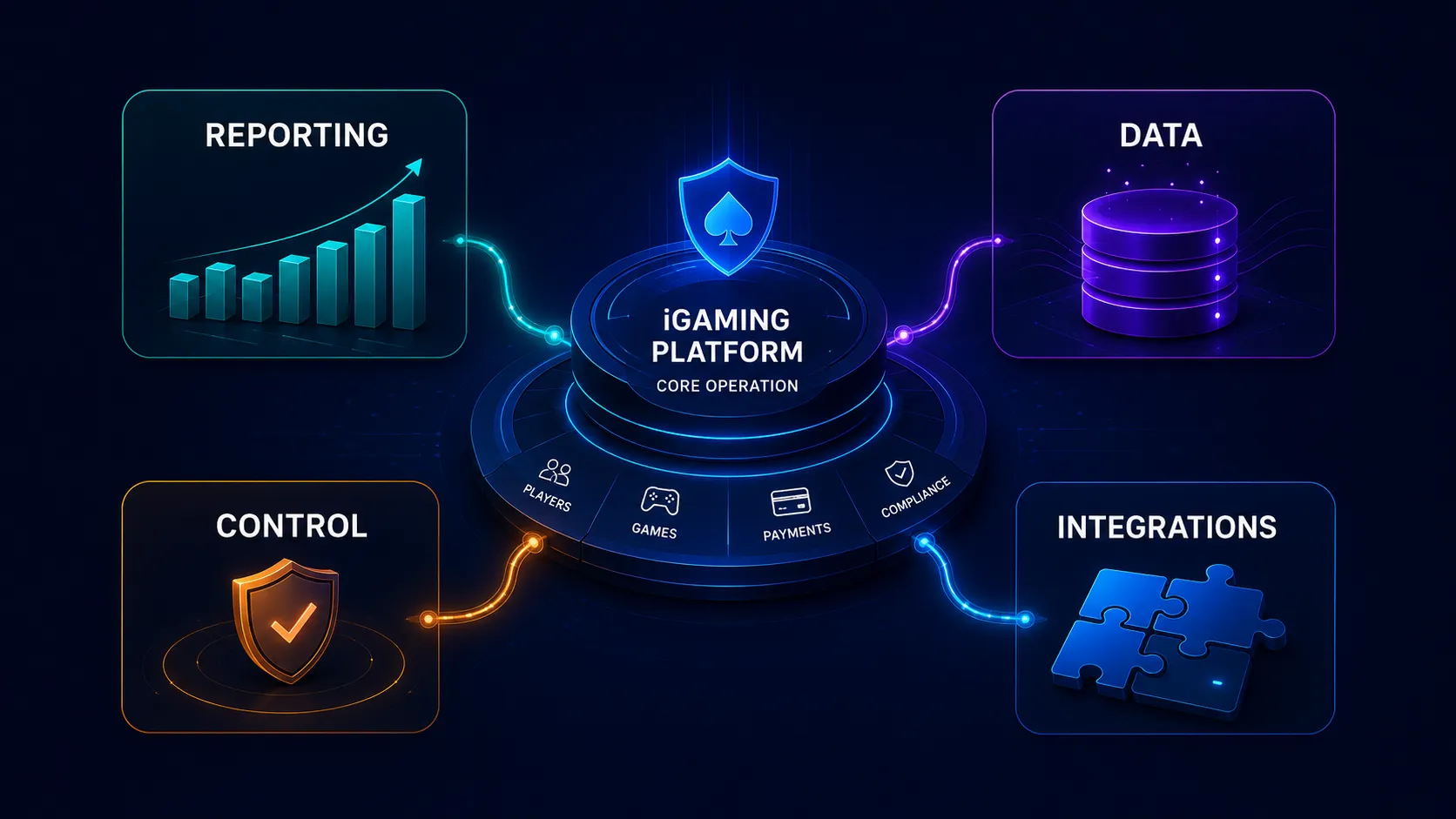
Better reporting is usually the first obvious need, but autonomy quickly becomes just as important. A growing team should be able to handle normal operational changes without unnecessary supplier dependency.
That means dependable reconciliation for finance, segment-level performance for marketing, clearer visibility into payments and bonuses for operations, and enough configuration access for product teams to keep moving at a sensible pace.
Common Problems
Reporting and control problems often show up together. The headline numbers may be correct, yet answering a simple follow-up question can take hours.
At the same time, small configuration changes can sit in a provider queue and slow down everyday work.
What to Prioritise
Before blaming the core platform, isolate the actual gap. A working stack may only need better player-account visibility, CRM orchestration, affiliate attribution or engagement tooling.
Replacing everything is unnecessary if one specialist capability is the real constraint.
Whenever another system is added, make the ownership model explicit: where the source data lives, which events move between systems, how failed events are detected and who owns configuration and incident resolution.
Expanding to Multiple Brands
What Changes
The moment a second player-facing brand is added, shared infrastructure stops being a purely technical decision. The team has to decide what belongs at group level and what needs a hard boundary between brands.
Technology Support
Those boundaries have to exist below the frontend. Accounts, wallets, bonuses, content, reporting, permissions and support history may all need different levels of separation.
There is no single separation model that works for every group. The right structure depends on legal entities, jurisdiction, consent rules, operating ownership and the way the underlying platform is built.

Common Problems
Trouble starts when those boundaries are discovered after the brands are already live.
One shared setting can accidentally affect another brand, while systems that should exchange information may stay isolated and leave gaps in reporting, service history or oversight.
What to Prioritise
Check multi-brand capability beneath the UI. Account structures, wallet rules, staff roles, permissions, reporting, data separation and audit records should match the way the brands will actually be operated.
Entering New Markets
What Changes
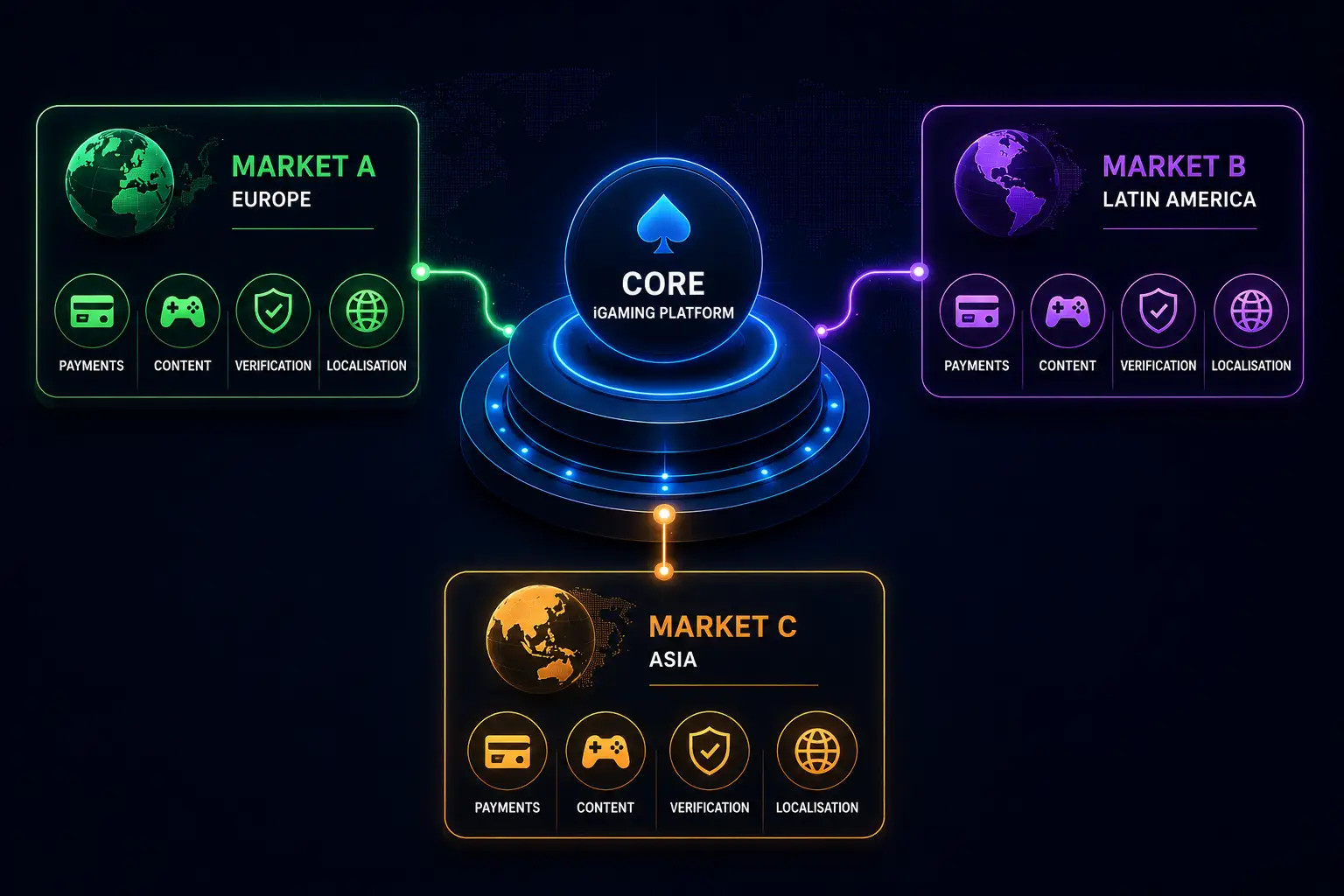
A stack that works well in one country can need real changes in the next. Payment habits, verification, language, available content, reporting and regulatory controls all vary by market.
Technology Support
Content and sportsbook coverage need the same market-by-market check. A game portfolio, payment mix or betting setup that performs well in one jurisdiction may be unavailable, unsuitable or incomplete in another.
Common Problems
The expensive mistake is treating expansion like a copy-and-paste launch. Missing payment methods, unavailable content, new reports or extra approval steps can change both the implementation plan and the economics of entering the market.
What to Prioritise
Check market readiness across the whole stack before committing to a launch date. Licensing, testing, certification, content availability, payments and reporting can all change the critical path.
For Great Britain, the UK Gambling Commission currently lists 16 weeks as the processing time for an operating licence application. Other jurisdictions use different processes, so confirm regulator and supplier lead times before fixing the launch date.
Modernising the Platform
What Changes
A platform does not have to be broken to become a problem.
Releases can get slower, integrations can become fragile and manual work can quietly grow until normal changes take far more effort than they should.
Technology Support
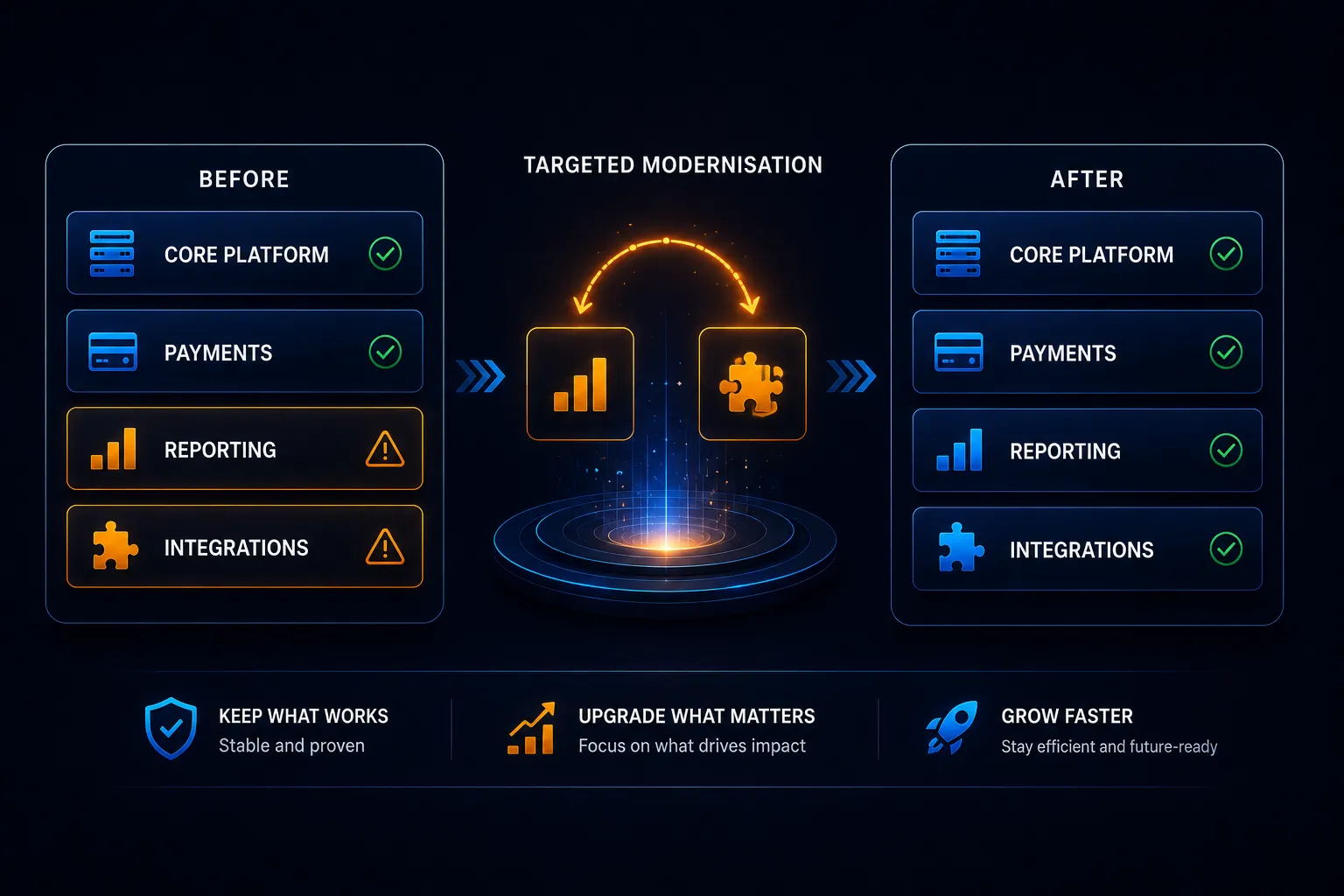
The first job is to find the constraints that are actually hurting revenue, reliability, operations or delivery speed. Some of them may be fixed independently while the core platform stays in place.
Common Problems
Modernisation becomes expensive when “improve the platform” turns into “rebuild everything” before anyone has proved where the real bottleneck sits.
What to Prioritise
Start with changes that have a clear business impact and a manageable boundary.
That could mean rebuilding the frontend, improving reporting pipelines, replacing an integration layer, adding monitoring or swapping one specialist system while the core stays untouched.
Replacing or Migrating the Platform
What Changes
Migration changes the risk completely.
Once the decision to leave a provider or replace core technology is made, the priority is no longer adding features; it is moving data and operations without losing control of either.
Technology Support
The new platform needs usable records, not just an export file.
Player accounts, balances, transaction history, responsible gambling information, consent records and audit data all have to arrive in a form the new operation can trust.
Exit terms matter as much as export formats. Contracts, documentation and access rights should define what can be exported, in which format, who supports the extraction and how long access remains available.
Where suppliers process personal data, confirm data-return or deletion duties and migration responsibilities with qualified legal and compliance advisers before cutover.
Common Problems
Exit rights are easy to ignore while the relationship with a provider is working.
During migration, that becomes painful: historical records may be incomplete, balances may be difficult to reconcile or the export may need significant reconstruction before it can be used.
What to Prioritise
Run migration as a controlled sequence rather than one big cutover. Review the source data, map fields, run test migrations, test integrations, reconcile balances, define rollback conditions and monitor the live operation after cutover.

iGaming Technology Priorities from Launch to Migration
| Business Phase | Main Technology Need | What to Check |
|---|---|---|
| Launch | Complete operating foundationRegistration, payments, content, support and reporting | Responsibilities and readinessOwnership, integrations, testing and market requirements |
| Growth | Reporting and operational controlBetter data access and faster routine changes | Autonomy and integration qualityAPIs, data flow, reporting depth and specialist gaps |
| Multiple Brands | Brand separation and governanceShared services with clear brand-level boundaries | Architecture below the frontendAccounts, wallets, permissions, reporting and audit records |
| New Markets | Local market readinessPayments, content, language, controls and reporting | Approval and localisation requirementsTesting, certification, integrations and market availability |
| Modernise | Improve weak componentsFaster delivery, stronger integrations and less manual work | Business impact and dependenciesArchitecture, integration risk, scope and measurable outcomes |
| Migration | Data and operational continuityMove critical records without disrupting the business | Export, testing and cutover readinessFormats, reconciliation, rollback and post-migration support |
The same platform can be a good fit at one point and a poor fit later. What matters is whether it still gives the team the control, data access and flexibility needed for the next real move.
Common Mistakes When Planning iGaming Technology
Most poor technology decisions start with a bad diagnosis. These three mistakes show up often because they make the solution look obvious before the real constraint has been confirmed.
Assuming growth always requires new technology
More revenue or more players does not automatically mean the platform is wrong. Replace technology only when you can point to the constraint that is blocking operations, control or expansion.
Treating every symptom as a platform problem
Slow releases and weak reporting can be technical problems, but they can also come from contracts, unclear ownership, limited team capacity or poor processes. Fixing the wrong cause only creates another project.
Building too far ahead
Planning one move ahead is sensible. Building today for several hypothetical brands, markets or workflows usually creates scope and maintenance the operation has not earned yet.
Diagnose first, then choose the smallest change that removes the proven constraint.
Conclusion: Build for Today, Prepare for What Comes Next
A strong iGaming technology strategy does not mean building for every possible future scenario. It means supporting today’s operation reliably while protecting the fundamentals that keep the next move practical: data access, clean integration boundaries, clear ownership, portability and workable exit terms.
Optimise when the constraint is local, modernise when targeted changes can restore speed and control, and migrate only when the current platform can no longer support the business without unacceptable friction or risk.
Frequently Asked Questions
How Do iGaming Technology Needs Change as a Business Grows?
At launch, the priority is a reliable operating foundation. Growth brings pressure for better reporting, data access and day-to-day control. Multiple brands need clearer governance and separation, while new markets add local payments, content, testing and compliance requirements. Later, targeted modernisation or migration may become necessary.
What Technology Does a New iGaming Business Need?
A new operation typically needs registration, payments, identity and verification, casino or sportsbook capability, back-office access, reporting, support and responsible gambling controls. The exact mix depends on the product and the market being launched.
When Does an iGaming Business Need More Platform Control?
More control is needed when routine changes, reporting, integrations or data access start slowing the team down. Before replacing the core platform, check whether the real constraint is a specialist system, the supplier agreement or an internal process.
How Do Technology Requirements Change When Entering a New Market?
A new market can change payment methods, currencies, identity checks, available content, language support, responsible gambling controls, reporting, testing and certification. The existing stack should be checked end to end rather than assumed to transfer unchanged.
How Do You Know When an iGaming Platform Needs to Be Modernised or Replaced?
Modernisation makes sense when releases are slowing, integrations are fragile, reporting is limited or manual work is increasing. Replacement becomes more likely when core architecture, data access or supplier constraints stop targeted improvements from solving important business needs.